Lesson Plans
Engage your students with hands-on, experiential exercises. Teach critical skills like problem validation, financial modeling, and customer interviewing—no extra prep required.
Our Most Popular Lesson Plans



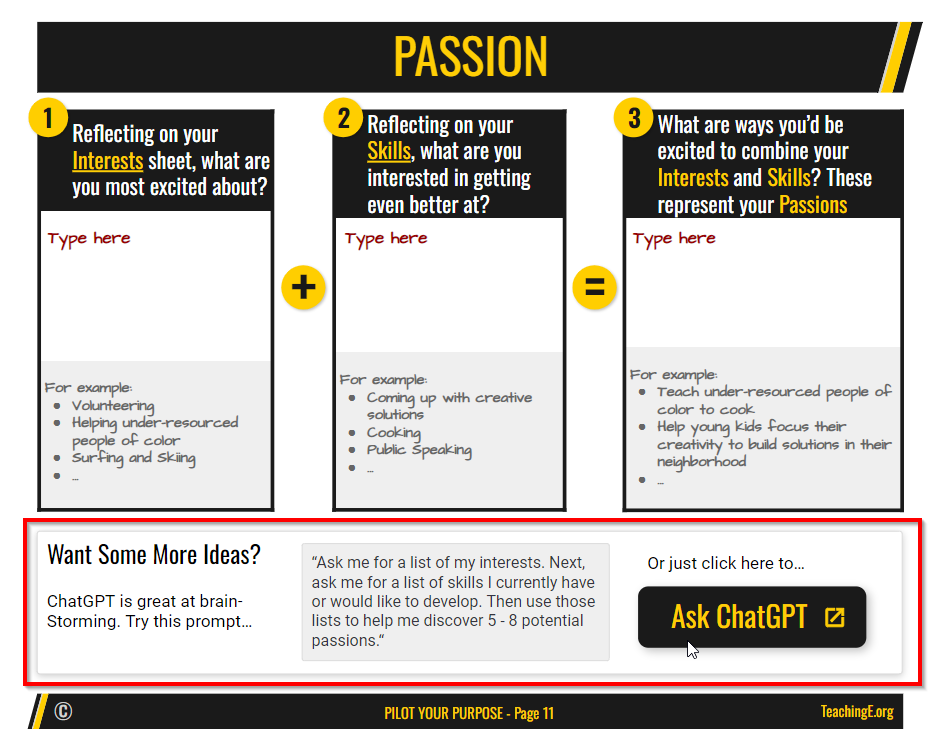
Improved: Pilot Your Purpose v2
Not every student dreams of becoming an entrepreneur but... Every student yearns to find their purpose. Regardless of their entrepreneurial ambitions, helping students define their purpose will give them a reason to learn entrepreneurial skills. Whether they want to...


Your Day 1 Problem
Students' eyes glaze over when they read the syllabus. How we can engage students and start teaching them entrepreneurship skills from the moment they walk into our classes? Jay Markiewicz from Virginia Commonwealth University developed a novel way to start your...

The NEW Marshmallow Tower Challenge
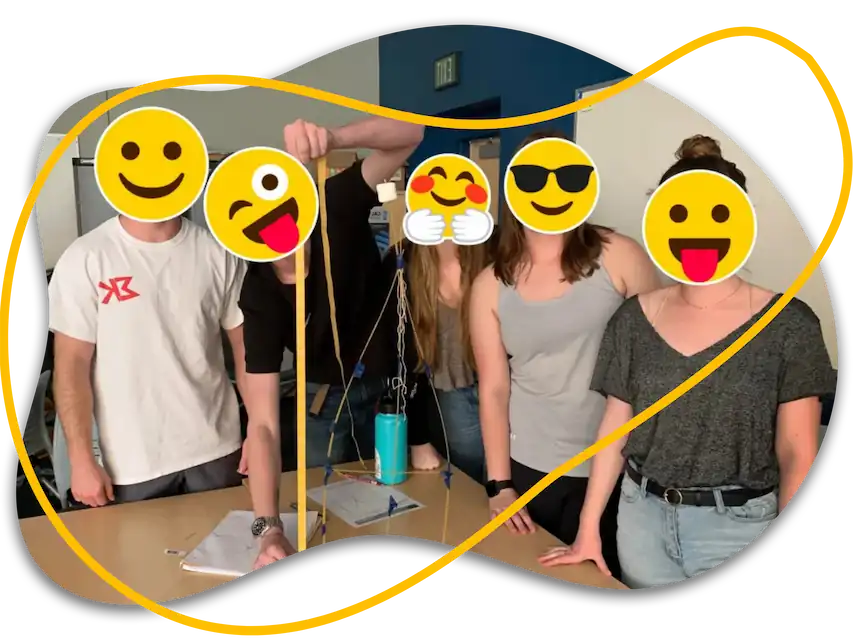
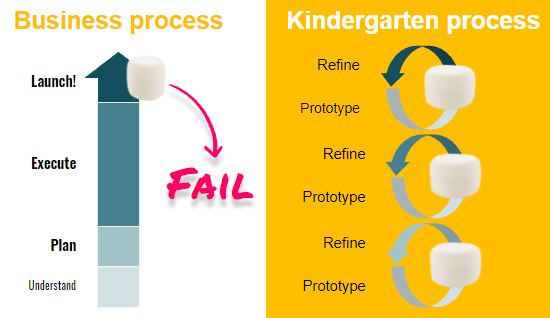
What is the Marshmallow Tower Challenge? The Marshmallow Tower Challenge is a 45-minute team exercise where students build the tallest freestanding structure they can from spaghetti, tape, string, and one marshmallow, then rebuild it after a short debrief. In an...

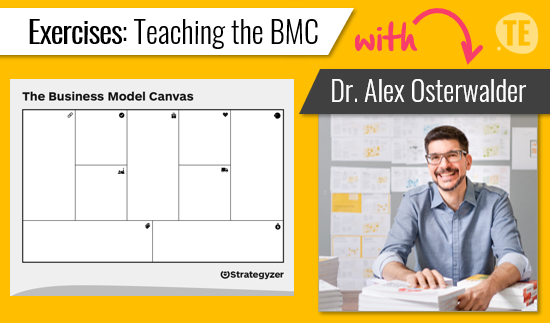
Teaching the Business Model Canvas: Part 1 – Intro
When we ran a workshop with Dr. Alex Osterwalder about how he teaches his Business Model Canvas, attendees were so excited about what he was sharing, 98% of them voted to change our schedule on the fly and extend his session from 60 to 90 minutes. The exercises he was...


Financial Modeling Showdown: A Game to Teach the Basics of Entrepreneurial Finance
If your students get bored (or anxious) when you start talking about finance, you know what's waiting for you: Disappointing and unrealistic financial projections. Financial modeling is incredibly difficult to teach in an engaging way. That's why, in addition to our...

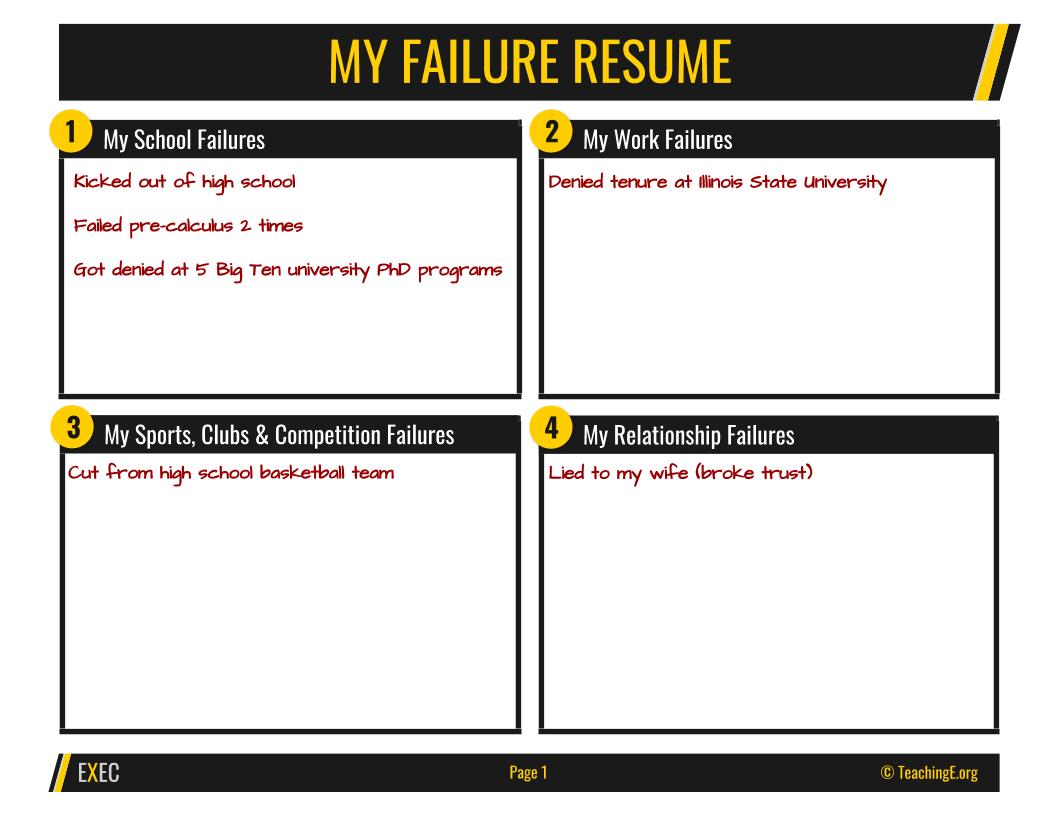
Failure Resume
What is a Failure Resume? A Failure Resume is a growth-mindset exercise where students list their biggest failures, then reflect on what their single biggest failure taught them and how it changed their behavior. Instead of hiding failure, students learn to treat it...

Exercise: 60 Minute MVP
Imagine looking out at your classroom, and every student is talking and typing furiously. It's noisy. Students are learning together and teaching each other. There's a buzz of nervousness and excitement! This is by far, one of Justin and my favorite in-class...

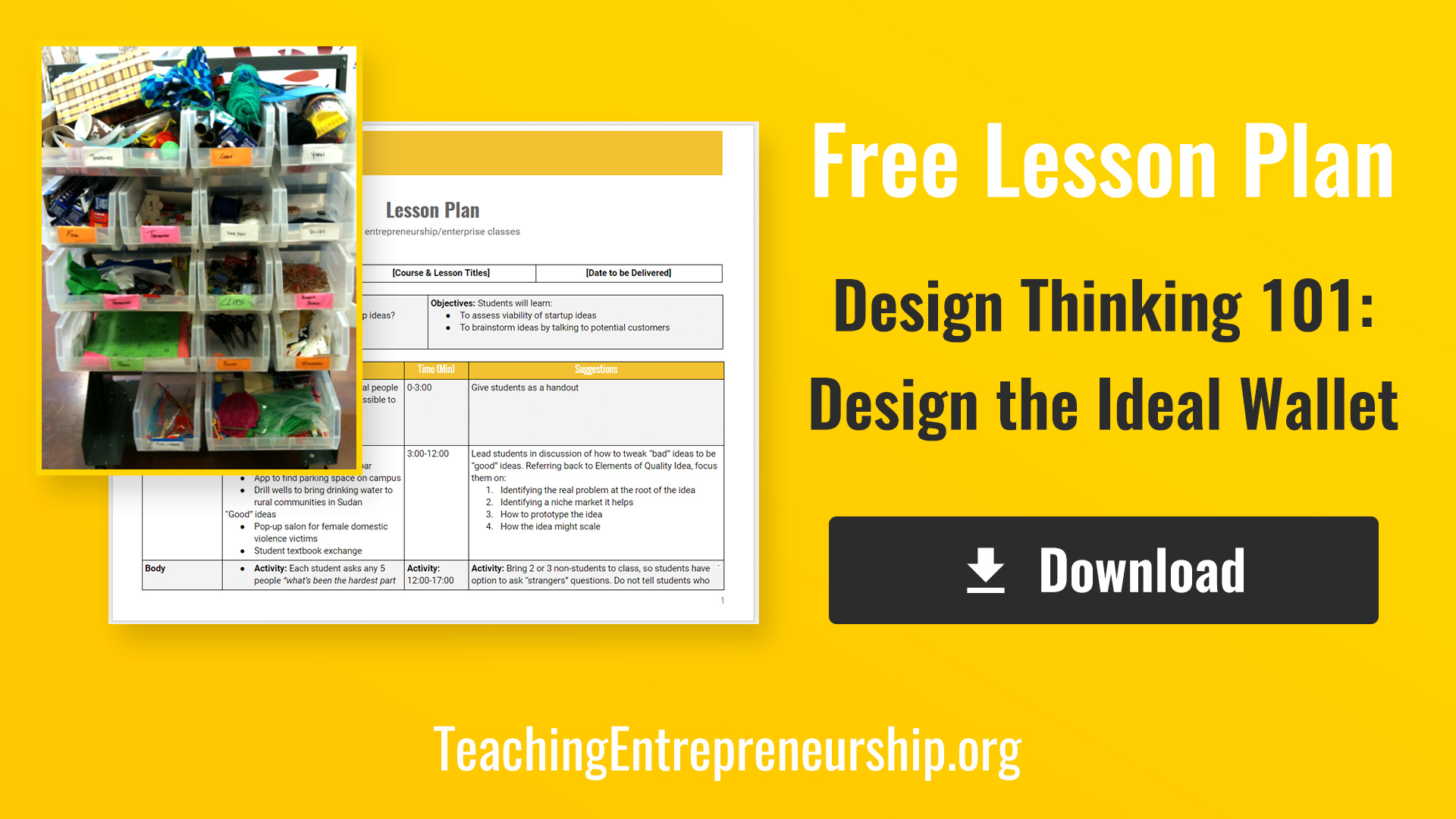
Design Thinking 101: Design the Ideal Wallet
What is design thinking? Design thinking is a human-centered problem-solving process, popularized by Stanford's d.school, with five modes: empathize, define, ideate, prototype, and test. The Wallet Challenge (Design the Ideal Wallet) is the classic introductory...


Observe Customers Where They Are
Are your students shy about conducting customer interviews? Do your students struggle to collect information about problems from customer interviews? Observing customers is another great way to gather customer information. In some important ways, it can provide even...
Topic Specific
Lessons
More Lesson Plans
Slido vs Kahoot for College Classes: Which to Use and When
Short answer: Neither wins outright; pick by the job. Kahoot is a game: its classic mode gives more points for faster correct answers, so it suits fast, competitive review. Slido is built for audience Q&A and polls, and its quiz ranks students by correct answers...
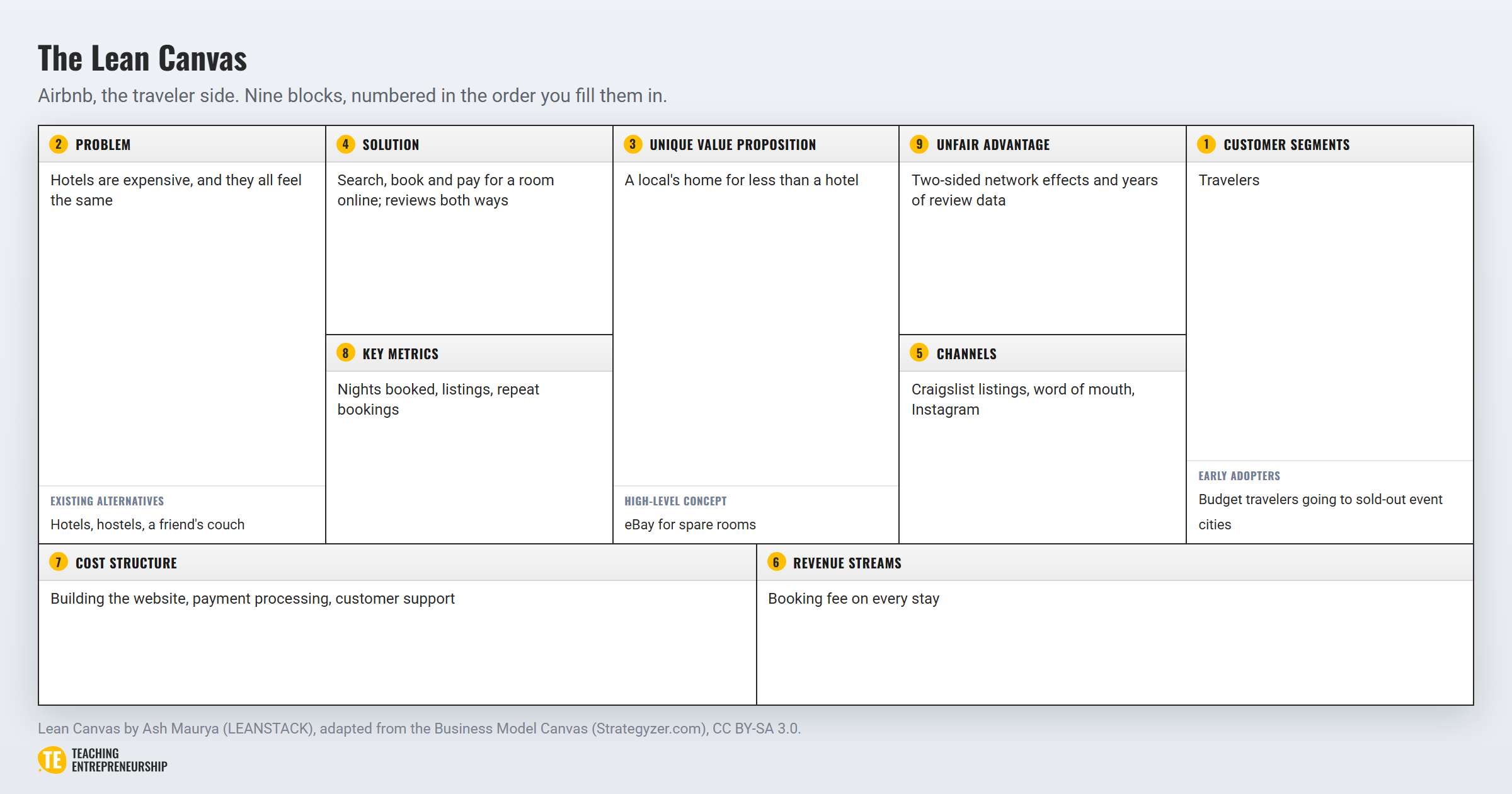
How to Test a Lean Canvas: Find the Riskiest Assumption (Ceres Case)
How do you test a Lean Canvas? A finished canvas is a wall of guesses, and the useful question is which guess to check first. The riskiest assumption is the one most likely to kill the business, and it is almost never the one students pick. This is the third of three...
Lean Canvas Examples: Fill-in-the-Blank Exercises (Dollar Shave Club and Salesforce)
What is the fill-in-the-blank Lean Canvas exercise? Students get a Lean Canvas for a company they already know with some blocks filled in, and they write the rest. Each round removes a little more scaffolding, until they can build a canvas for their own venture...
Join 15,000+ instructors
and get new resources:
New Lesson Plans
New Syllabi
Free Invites to Teaching Workshops